
Before you start
- A drop of household bleach turns mildew pale in 1 to 2 minutes; dirt and extractive stains do not change.
- Mix 1 part bleach to 3 to 5 parts warm water with a little powdered, not liquid, detergent.
- The EPA says paint applied over moldy surfaces is likely to peel.
Dark streaks and green film on siding are part of life in Everett. They are also the most common reason new paint fails early on an otherwise good house. The fix is simple but has to be done in the right order: identify what is growing, clean it properly, let the wood dry and only then paint.
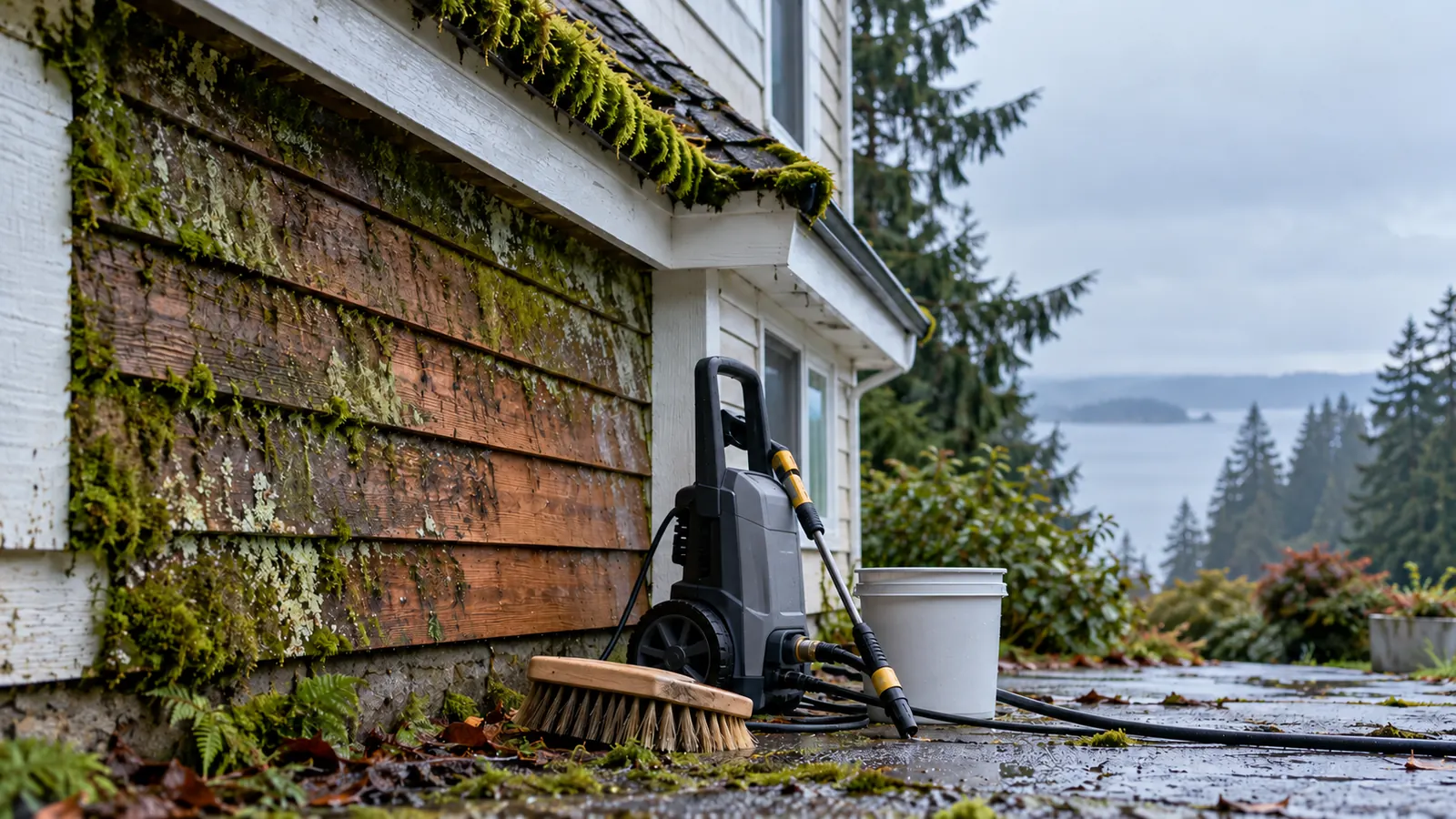
Is it mildew, dirt or stain?
The U.S. Forest Products Laboratory’s Wood Handbook describes mildew as the most common biological problem on painted and unpainted wood. It does not degrade the wood, but it causes graying or an unsightly dark gray or black blotchy look. Algae, usually green, grows in damp places and often grows together with mildew.
To test, put a drop or two of liquid household bleach on the dark area. According to the handbook, mildew will usually bleach out in one to two minutes. If the spot does not change, it is probably dirt, extractives bleeding from the wood or iron stain, and those need different treatment.
The Wood Handbook’s cleaning recipe
| Ingredient | Amount |
|---|---|
| Household bleach (about 5% sodium hypochlorite) | 1 part, for example 1 gallon |
| Warm water | 3 to 5 parts, for example 3 to 5 gallons |
| Powdered household detergent | A little, to help lift dirt |
Use the weakest solution that works; the handbook says one part bleach to five parts water should be adequate and that no mixture stronger than one part bleach to three parts water should be necessary. It also warns against liquid detergent, because some contain ingredients that react with bleach to give toxic fumes.
Wear eye protection and gloves, wet nearby plants first and rinse them afterward, and never mix bleach with ammonia or other cleaners.
Scrub, rinse and dry
- Scrub gently with a bristle brush or sponge.
- Rinse thoroughly with a garden hose, keeping the water stream pointed down so it does not drive water behind the siding.
- If you use a power washer, keep the pressure low to avoid damaging the wood, and still point the spray downward.
- Let the wood dry before priming or painting; see The Best Time to Paint a House in Everett: Reading the Calendar and the Siding.
The handbook recommends refinishing the cleaned surface as soon as it has dried, using a finish that contains a mildewcide. Mildew can grow through a coating or under a clear finish, where cleaning solution cannot reach it, so do not skip cleaning just because the old paint looks intact.
Never paint over mold
The EPA is blunt about this: do not paint or caulk moldy surfaces. Clean the mold and dry the surface first, because paint applied over moldy surfaces is likely to peel. For indoor mold, the EPA says areas smaller than about 10 square feet can usually be handled by a homeowner, while larger areas or water damage call for professional guidance.
What about moss?
Moss on siding, trim or the bottoms of posts is a sign that wood stays wet for long periods. Scrape and brush it off, then look for the cause: missing end-grain sealing, siding touching the roof or ground, leaking gutters or plants holding moisture against the wall. The Wood Handbook warns that decay often starts inside wood while the surface still looks sound, and recommends probing suspect areas with an ice pick and replacing decayed boards before painting.
Old paint and lead
Washing and scraping old paint on a house built before 1978 can disturb lead-based paint. The EPA’s renovation rule prohibits open-flame burning and power tools without HEPA dust collection when lead paint is disturbed. Read Painting an Older Everett Home: Lead-Safe Rules, Prep and What to Ask a Painter before you start.
Keep it from coming back
Other stains that look like mildew
If the bleach test does not lighten a spot, it is probably something else. The Wood Handbook names dirt, extractives bleeding from woods such as western redcedar, and iron stain as the usual suspects. Extractive stains come from water moving through the wood and usually point to a leak, an open joint or unsealed end grain; fixing the water path matters more than cleaning the stain. Brown spots over knots are resins in the knot itself and need a shellac or knot sealer before priming.
Timing helps too. Clean in late spring or early summer, then give the walls several dry days before priming so the wood can release the water used in washing.
Once the house is painted, wash mildew off sound paint rather than repainting; the Wood Handbook notes that discolored paint that is still sound does not need repainting. Trim back plants touching the siding, keep gutters clear and check shaded walls each spring. The rest of the prep is in Exterior Paint Prep Checklist for Everett Homes: From Washing to the Last Coat.
How long will your paint or stain last? Try the paint life check.