
Before you start
- Paint is the only finish that can give a bright white appearance, the Wood Handbook notes.
- Paint on the north side lasts about twice as long as on the south side.
- Acrylic latex keeps its gloss longer than oil-alkyd paint.
Color is the fun part of an exterior paint job, and the part people most often regret. Northwest light is soft and gray for much of the year, so a color that looks crisp on a sunny sample card can look flat or heavy on a November afternoon. Here is a practical way to choose, plus what the federal research on wood finishes says about how colors and finishes wear.
Start with paint or stain
Your first choice is the type of finish, because it limits your colors. The U.S. Forest Products Laboratory’s Wood Handbook explains that paint gives the most protection against sunlight, conceals some surface defects, offers the widest range of colors and can be glossy, which stains cannot. It is the only finish that can give a bright white appearance. Solid-color stains look similar to paint but show more of the wood’s texture, and semitransparent stains let the grain show through while adding color.
- Paint — Widest, including bright white and high gloss. Smooth film; grain and color of the wood hidden.
- Solid-color stain — Wide, flat to low sheen. Opaque but shows texture.
- Semitransparent stain — Wood tones and muted colors. Grain visible.
How light changes color here
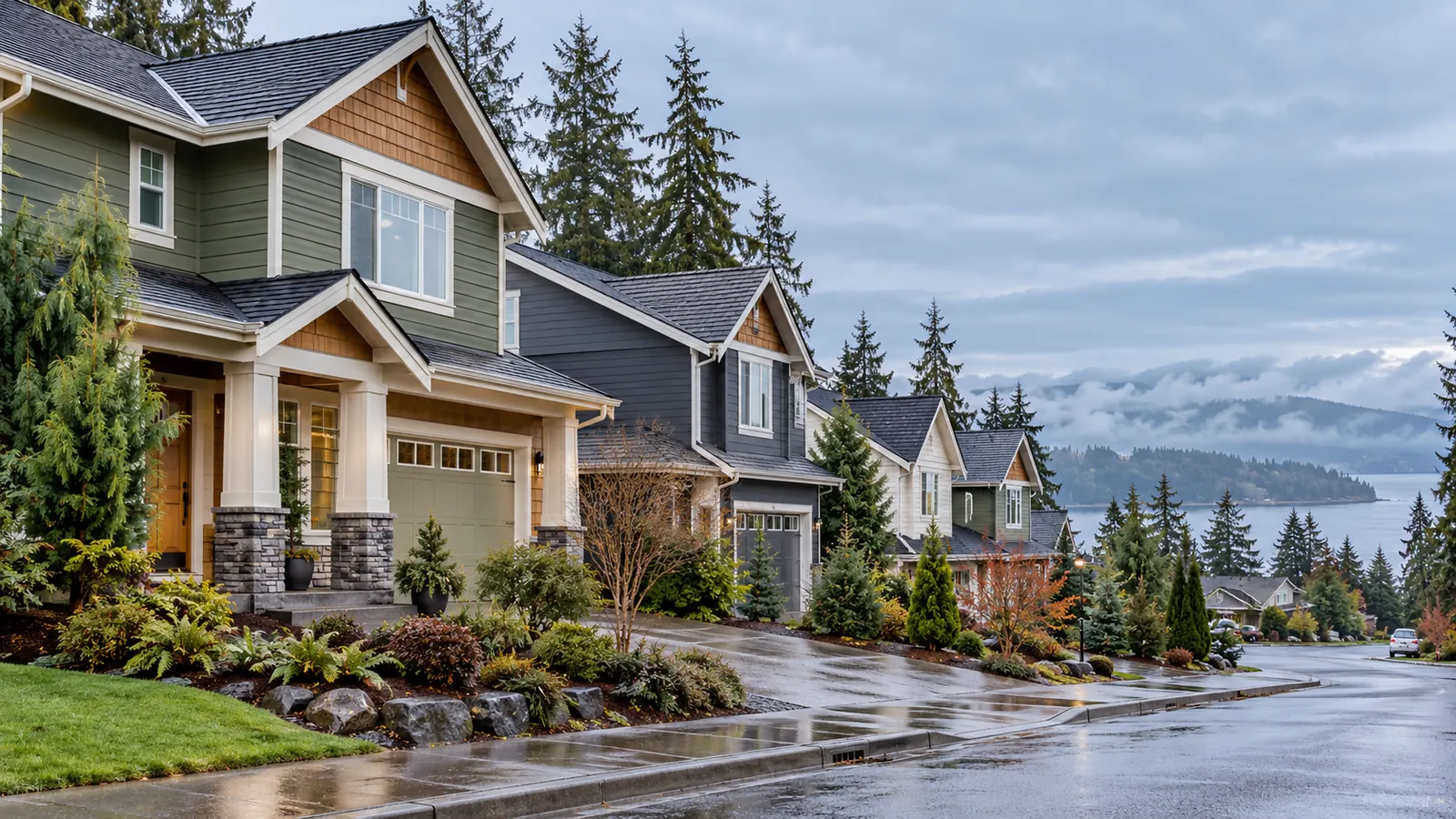
Long gray seasons make colors read darker and cooler than they do in a showroom. Test warm whites, creams and mid-tones alongside stark whites and pale grays; the difference shows most on overcast days. Strong colors can work well on doors and trim, where a small area brightens a façade without overwhelming it.
Tip: Paint large sample boards, at least two feet square, and move them around the house over a week, including a cloudy day and an evening. Small chips are misleading outdoors.
Gloss and durability
Sheen matters as much as hue. The Wood Handbook notes that acrylic latex paints keep their gloss better than oil-alkyd paints, which tend to lose gloss within a year or two and become brittle over time. Ask to see each sheen on a sample board before deciding.
Sun, south walls and fading
Sunlight is what wears paint out. The handbook observes that paint on the north side of a house lasts about twice as long as on the south side, so a south or west wall will show fading first. If you choose a deep color, plan on touching up the sunny sides sooner, and keep a labeled can of the exact color for repairs.
Coordinating siding, trim and doors
- Pick the body color first, then a trim color with clear contrast so windows and edges read from the street.
- Use the door as the accent; it is the cheapest place to try a bold color.
- Consider fixed elements you are not painting: roof, stone, brick and window frames.
- Look at the house from across the street, where neighbors will see it.
Older homes
If your home was built before 1978, the year lead-based paint was banned for residential use, its older layers may contain lead. Changing colors usually means scraping and sanding, which can release lead dust from old layers. Read Painting an Older Everett Home: Lead-Safe Rules, Prep and What to Ask a Painter before any work, and follow the EPA’s lead-safe practices.
Cedar and natural wood looks
If you love the look of cedar, a semitransparent stain keeps the grain visible, but it needs renewing more often than paint, typically every 4 to 8 years on saw-textured or weathered wood according to the Wood Handbook. Painting cedar a light color has its own challenge: extractives in the wood can bleed through and discolor it unless a stain-blocking primer is used. See Painting or Staining Cedar Siding: Extractive Bleed, Primers and How Long Each Finish Lasts.
Dark colors fade first
Color affects durability more than many people expect. The Wood Handbook notes that some pigments fade more than others and that many dark-colored finishes fade to an unacceptable look long before the finish itself fails; it suggests checking with the paint manufacturer that a color will last, and observes that white is always a safe choice. Its service-life estimates for paint do not account for fading, so a deep color on a sunny wall may need repainting for looks before it needs it for protection.
Chalking and two-tone houses
Most paints chalk to some extent as they age, which lets the surface clean itself in rain. The Wood Handbook warns that chalk becomes a problem when it washes down onto a surface of a different color, such as a dark body color streaking over light trim or brick. Modern latex paints chalk very little, according to the handbook, but it is still worth thinking about where water runs when you place contrasting colors.
If you are repainting, the handbook says latex paint or solid-color stain can go over existing paint as long as the old paint is clean, sound and free of chalk; scrub chalky surfaces with a detergent solution and rinse before painting.
Once the colors are settled, the rest is preparation and timing; see Exterior Paint Prep Checklist for Everett Homes: From Washing to the Last Coat and The Best Time to Paint a House in Everett: Reading the Calendar and the Siding.
How long will your paint or stain last? Try the paint life check.