
Before you start
- Lead-based paint was banned for residential use in 1978.
- Paid work that disturbs paint in pre-1978 homes must be done by EPA-certified firms.
- Exterior jobs need plastic sheeting at least 10 feet out from the work.
Key takeaways
- Find out the year your house was built before anyone scrapes.
- Hire a firm certified under the EPA’s Renovation, Repair and Painting Rule for paid work on a pre-1978 home.
- Never burn paint off, use very hot heat guns or power-sand without HEPA dust collection.
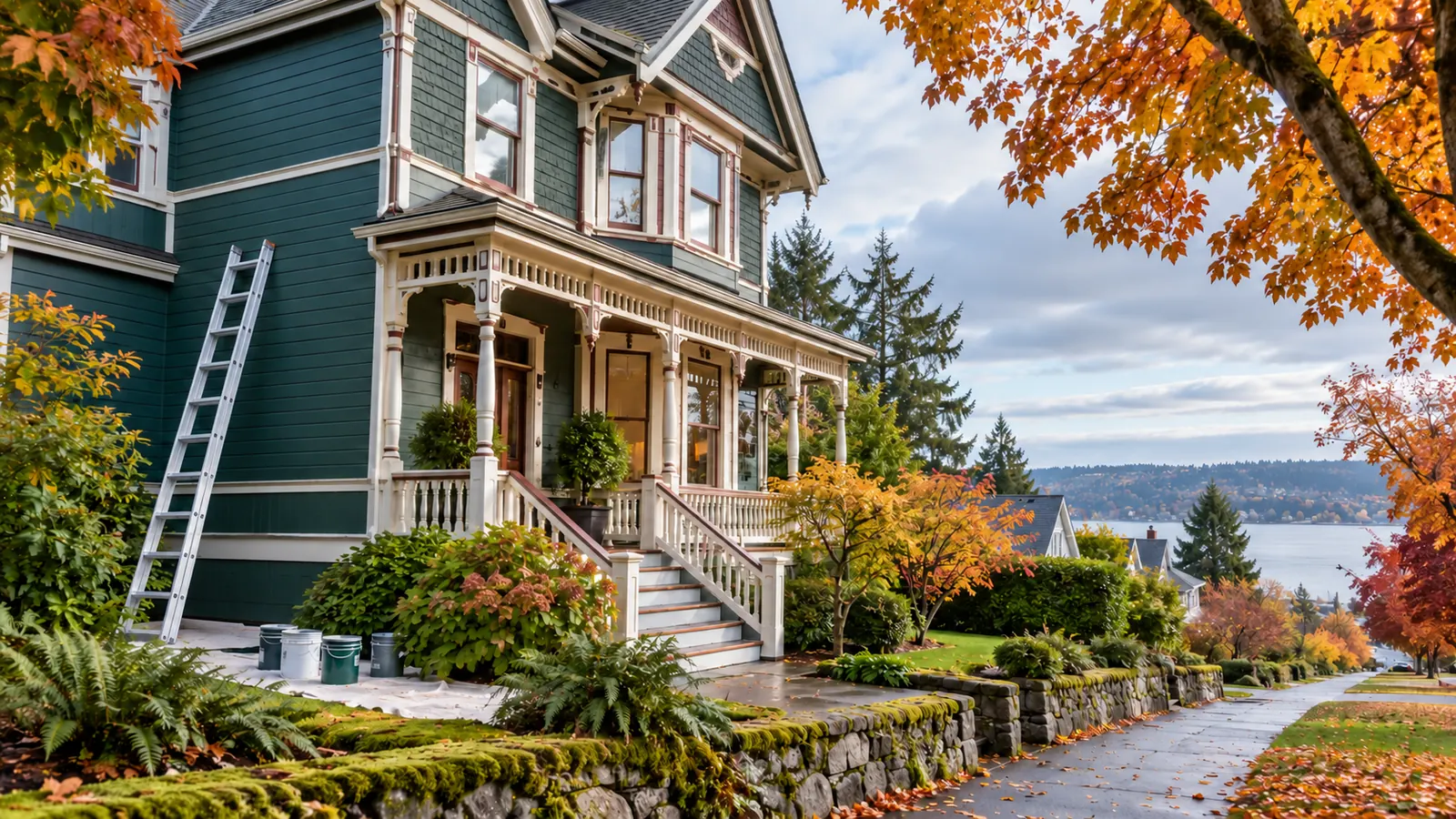
Older homes are some of the most rewarding to paint and the most important to do carefully. If the house was built before 1978, scraping and sanding can turn old paint into lead dust. The rules and practices below come from the EPA and the Washington State Department of Health.
Why 1978 matters
In 1978 the federal government banned the sale of lead-based paint for use in homes. The EPA estimates that about three-quarters of U.S. homes built before 1978 still contain some lead-based paint. It is safe while intact, but when paint peels, chips or is disturbed, it creates dust and chips that are hazardous if inhaled or swallowed. On the outside of a house, lead paint is especially common in high-gloss paint on trim such as window sills, door frames and railings.
Who is most at risk
The Washington State Department of Health says lead-based paint and lead dust are the main sources of lead exposure, and that children six and younger are most affected because their bodies absorb more lead and their brains and nervous systems are more sensitive. Lead in young children can cause behavior and learning problems, lower IQ and hearing problems. Pregnant people should also avoid exposure.
The EPA’s Renovation, Repair and Painting Rule
Anyone paid to do work that disturbs paint in a home built before 1978 must be certified by the EPA, and their workers trained in lead-safe work practices. The rule applies to all firms, including sole proprietors. Homeowners working on their own homes are generally exempt, but the rule does apply if you rent out all or part of the home, run a child care center in it or renovate homes to sell.
| Rule for exterior work | What it requires |
|---|---|
| Plastic sheeting | On the ground at least 10 feet out from where paint is disturbed, farther if needed to catch all debris |
| Near the property line | Within 10 feet of the line, vertical containment or equivalent precautions |
| Prohibited methods | Open-flame burning, heat guns above 1,100 °F, power tools without HEPA exhaust |
| Signs | Post signs defining the work area and keeping others out |
| Minor work exemption | 20 square feet or less per exterior project |
Ask any painter for their EPA lead-safe firm certification before they quote work on a pre-1978 home, and ask how they will contain debris on the ground.
If you do it yourself
- Assume lead is present if you cannot confirm the house’s age.
- Mist surfaces before scraping or sanding to keep dust down.
- Use wet-dry sandpaper or sanding sponges; avoid dry power sanding without HEPA collection.
- Collect debris on heavy plastic and bag it as you go.
- Wash hands and face at every break and wash work clothes separately.
- Keep children and pets away from the work area.
Testing
The EPA recommends hiring a certified lead inspector or risk assessor to test before work. The Wood Handbook notes that older paint layers are the most likely to contain lead, so check all layers, not just the surface coat.
Disposal
The Wood Handbook warns that debris coated with lead-based paint is hazardous waste and must be disposed of under federal and local rules. Leftover new paint is different: Washington’s PaintCare program takes it at drop-off sites for free.
Choosing finishes for old wood
Old siding is often weathered, and the Wood Handbook found that the longer wood is left bare before painting, the sooner paint peels. Prime scraped areas quickly, use primer plus two top-coats and seal end grain. For the full sequence see Exterior Paint Prep Checklist for Everett Homes: From Washing to the Last Coat, and for trim and windows, which are where lead paint is most often found, see Painting Trim, Doors and Windows in the Northwest: Prep, Primers and Lead.
Children and blood lead testing
If young children live in or visit the home, Washington’s Department of Health offers a Lead Safe from the Start questionnaire to help parents and pregnant people decide whether to talk to a doctor about lead testing. DOH recommends screening children at 12 and 24 months of age, and federal rules require blood lead tests at those ages for children enrolled in Medicaid. Plan exterior paint work so children are away from the work area and from bare soil near the house until cleanup is complete.
Finally, plan the budget around the extra steps. Containment, careful scraping and cleanup take time, and that time shows up in a bid; see What Exterior House Painting Costs in Everett, and What Drives the Price.
How long will your paint or stain last? Try the paint life check.